Showing posts with label Money. Show all posts

Friday, March 14, 2008

Scarlette Affair


Date with Scarlett sells for $40,100 on eBay
Winning bidder from England will accompany star to her movie premiere

Access Hollywood
updated 5:22 p.m. CT, Thurs., March. 13, 2008

LOS ANGELES - Scarlett Johansson put herself on the auction block — and it paid off well for the actress and the Oxfam relief organization.

The eBay auction, which was for charity, closed with a winning bid of $40,100 by a lucky bidder who lives in England, Page Six reports. The winner will get to accompany the star to the premiere of her upcoming film, “He’s Just Not That Into You.”

Oxfam is an organization which "works to find lasting solutions to poverty and injustice," according to Oxfam.org.

However, Johansson isn't the first starlet to put herself up for bids.

In 2002, Charlize Theron auctioned off a chance to have dinner with her on eBay. A California man shelled out $38,000 to meet the actress, according the New York Post. Proceeds from the dinner went to the South African Children's Charity Project.

Thursday, December 13, 2007

Harley Museum

Shifting gears at Harley museum
By RICK BARRETT
rbarrett@journalsentinel.com
Posted: Dec. 12, 2007

The 200-foot glass wall has been finished, and the first major construction phase of Harley-Davidson's museum has been completed.
91735Harley-Davidson Museum

Click to enlarge

The company left two old "sand-hoppers" on the museum site, which were used for loading sand into trucks. They are orange, which is one of Harley-Davidson's primary colors.

Click to enlarge

Photos/Harley-Davidson

Although an opening date for next year hasn't been announced, this rendering shows what the completed Harley-Davidson museum will look like.
What's in Store

The Harley-Davidson museum, scheduled to open next summer, will feature hundreds of motorcycles, including brightly colored Art Deco models from the 1930s.

There will be interactive exhibits that allow visitors to get the "feel" of a Harley.

Visitors also can expect to see displays that explain the "nuts and bolts" of Harley engines.
Advertisement

Buy a link here

In early 2008, the iconic motorcycle manufacturer will be setting up exhibits, and the museum remains on schedule for opening in the summer, Harley officials said Wednesday.

The three buildings have been fully enclosed, and work has begun on the interiors, said Harley spokeswoman Rebecca Bortner.

"We are at the point where the structure is pretty much complete," she said.

Expected to draw 350,000 visitors a year, the Harley museum at 6th and Canal streets will be one of Milwaukee's biggest tourist attractions, much like Cleveland's Rock and Roll Hall of Fame and Atlanta's Coca-Cola Museum.

Harley's vast archives include motorcycles, clothing, photos, posters, promotional materials and magazines. There's one bike from each of Harley's 104 years, and there are Harley bicycles, snowmobiles and golf carts the company made years ago.

A customized Harley named King Kong also will be displayed. It's more than 13 feet long, weighs more than 1,000 pounds and has two Knucklehead engines. The bike's original owner, Felix Predko of Pennsylvania, spent more than 4,000 hours doing the customization.

For now, the museum's construction is center stage as hundreds of workers and contractors do a choreographed dance.

Companies from across the nation have been bidding for the right to install everything from steel beams to restroom partitions. Some contractors are motorcycle enthusiasts eager to etch their mark on the museum.

Harley produced a short video about one enthusiast, a bricklayer, who did the masonry work on one of the museum's walls.

A wall with Harley-Davidson written on it contains 20,887 bricks, including 4,700 bricks used for the lettering. Each brick was numbered, cut and placed in the wall by hand - by a Harley rider who put his heart and soul into it.

"We have seen a lot of enthusiasm like that," Bortner said.

Exposed steel, rivets and concrete are meant to reflect Milwaukee's and Harley's industrial heritage. The company purposely left two old, rusted "sand hoppers" on the 20-acre site that were used for loading sand into trucks. They are orange, which is one of Harley's primary colors.

The museum's raw look has created its own challenges, though, as contractors take precautions not to scratch or mar something that normally would be covered by drywall, carpet or paint.

Landscaping includes 700 recently planted trees and 5,000 bushes and native plants. The work was done in the fall so the trees and bushes would start growing in the spring.
Opens next year

The museum's opening date hasn't been revealed yet, though it will coincide with Harley's 105th anniversary celebration next summer.

Already, hundreds of people have asked about booking special events at the museum. Some of the requests have been for weddings.

"We have done a ton of publicity work in the motorcycle enthusiast community," Bortner said.

More than motorcycles, the museum is supposed to represent local culture. It has been called a showcase for the Menomonee Valley, an industrial area that was once an eyesore but has experienced extensive redevelopment.

Officials from Louisville, Ky., visited the Menomonee Valley to see how it might be a model for an industrial restoration in their city.

On Wednesday, Gov. Jim Doyle announced a $1.25 million brownfield grant to Harley that's supposed to help cover environmental remediation costs at the museum site.

Doyle estimates the museum will generate $78 million a year in area spending and $1.23 million a year in state and local taxes.

Saturday, December 1, 2007

At least I'm not that bad!

Wachovia Bank Tells Man He Owes $211 Trillion

POSTED: 5:24 pm EST November 30, 2007
UPDATED: 6:12 pm EST November 30, 2007


COBB COUNTY, Ga. -- It’s one thing to bounce a check and it’s another to be so far in the red Bill Gates, Warren Buffet and Donald Trump combined couldn’t come close to bailing you out. A Cobb County man got a letter from his bank with that very shocking news.

“And I open up the letter and I look at it and I’m like, ‘No, you’ve got to be kidding me,’ said Joe Martins.

Martins said he recently closed an account at Wachovia Bank and made good on an outstanding check. He just got a letter about the closure and his negative balance -- $211,010,028,257,303.00. That’s $211 trillion.

The letter includes the clarification, “no cents.”

“I didn’t know what to think. Obviously $211 trillion is a little above what I put in my bank account,” said Martins.

$211 trillion is more than 70 times the entire federal budget.

Still, the letter said Wachovia was reporting him to an agency that rates risky bank customers.

“I don’t own $211 trillion but because it is automated and reported to check systems, I assume it will be reported to my credit at some point,” said Martins.

He said Wachovia had made mistakes on his accounts before so he called Channel 2 first. Wachovia blamed the letter on a word processing error and the office of the president is sending a letter of apology.

“They tell me it’s going to be resolved but I’m not sure that it will,” said Martins. “I closed my account today.”

Since it is a closed account it is now safe to say the dollar figure in the letter matched the account number.

Martins said Wachovia told him late Friday afternoon they never did report him for his negative balance. Wachovia vice president David Oliver told Channel 2, “We can certainly understand how our recent correspondence with Mr. Martins about his account would be cause for great concern. I can confirm that there will be no adverse effect on Mr. Martins’ credit report related to the letter he received. Also, I can confirm that this was an isolated error specifically related to his account.”

Copyright 2007 by WSBTV.com. All rights reserved. This material may not be published, broadcast, rewritten or redistributed

Wednesday, May 16, 2007

Forever supply of Stamps

Man buys $8,000 worth of stamps to use forever
Man pays $8,000 to stick with today's stamp price
Wednesday, May 16, 2007

A guy walks into a post office and buys $8,000 worth of stamps.

Sounds like the start of something, but there's no punch line.

Someone walked into the post office in Camp Hill the other day and bought $8,000 worth of Forever Stamps.

The Forever Stamp is a 41-cent stamp that debuted last month. If you buy one, you can use it now and forever -- no matter where the cost of a stamp soars.

"It's not really designed to be an investment," said Mark Hnasko, a spokesman for the U.S. Postal Service in central Pennsylvania.

In fact, when the Postal Service unveiled the stamp in Philadelphia on April 12, it focused on convenience, not savings.

The Forever Stamp, which features a likeness of the Liberty Bell, brings "freedom and independence from using 1- and 2-cent stamps for mailing letters when stamp prices change in the future," the Postal Service said.

Note: That's when they change, not if.

Hnasko said the new stamps have been popular, but "that's really a rare occurrence for somebody to buy that many."

And just how many is that many?

Dropping $8,000 at the post office would get you 19,512 Forever Stamps and a couple of pennies in change.

You could send a lot of checks to creditors or invitations to one really big event.

The stamps are sold in sheets of 20, not rolls. That makes them ideal for individuals and less attractive for businesses, said John Schlotter, the postmaster at Camp Hill.

But even an $8,000 sale couldn't deplete the stock at Camp Hill.

"We have plenty, and we have plenty of 2-cent stamps," Schlotter said.

Because the cost of mailing a letter increased from 39 cents to 41 cents on Monday, post offices have been bustling with people buying 2-cent stamps.

Those who buy the Forever Stamps will never have to queue up for extra postage.

So maybe that's the punch line: Guy goes into the post office and buys $8,000 worth of Forever Stamps -- and now he never has to wait in line in the post office again.

Monday, April 9, 2007

Hot Gas?


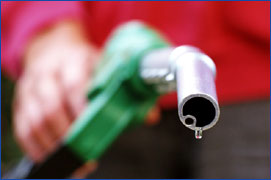
April 9, 2007 — Consumers are feeling the pain at the pump, as gas prices have risen for nine straight weeks. Now lawsuits around the country claim drivers are being ripped off in a gas gouge they can't even see.

There are at least nine lawsuits pending that claim some gas stations are padding their profits by selling warm gasoline.

That might sound strange, but think back to high school physics. Liquids expand as they get warmer, so if the gasoline at the pump is overheated, you don't get as much in your tank.

Mark Rushing is a long-distance trucker. When he fuels up, every penny counts.

"Fifty-eight gallons of gas cost me $168 dollars," Rushing said.

But he says he often overpays because gas stations don't follow the fuel industry's own standard that gas should be sold at 60 degrees Fahrenheit.

When the temperature outside gets above 60, gasoline at the pump expands, and you get less of it.

Physics professor Michio Kaku demonstrated the concept by heating water in a bottle. As it heated up, it expanded and overflowed. In other words, it took less water to fill the same size container.

"Remember that gasoline expands roughly three times faster than water," Kaku said. "So magnify this effect inside your gas tank."

You pay the same, but you're getting less energy for your car. That's why Rushing and other drivers are suing. They say they're being ripped off because pumps don't account for outdoor temperature changes.

Disagreement Over How Much Fuel Is Lost

It's something most people never even think about.

"I just never thought about it. I put gas in my car and go," said Linda Morton.

An investigation by the Kansas City Star newspaper found that American drivers may overpay $2.3 billion a year, with drivers in warm states like California hit the hardest.

An independent fuel marketers and retailers group argues if any gasoline is lost, the amount is tiny.

"We do not see the information they have gathered as being credible," Jay McKeeman said. "Basically it's about a tablespoon in 12 gallons of gasoline."

But consumer advocates point to chilly Canada, where the pumps are controlled for outside temperature. The industry went along with it there, and cynics say that's because fuel "shrinks" when it's cold, which benefits consumers.

"They fixed it in Canada because they [the industry] were losing money," said trucker Mark Rushing. "How come they won't fix it here?"

There are no laws requiring gas stations in the United States to adjust for hot fuel, so they are not doing anything illegal.

But if you want to avoid "losing" fuel in your tank, fill up overnight or early in the morning before it gets hot.

Or fill up if it's below 60 degrees — you may actually get a little extra fuel for your money.

Tuesday, March 20, 2007

$38 Billion "woops!"

Computer Tech Accidentally Erases Info on Alaska's $38 Billion Oil Fund

Tuesday, March 20, 2007

JUNEAU, Alaska — Perhaps you know that sinking feeling when a single keystroke accidentally destroy hours of work. Now imagine wiping out a disc drive containing an account worth $38 billion.

A computer technician at the Alaska Department of Revenue deleted applicant information for an oil-funded sales account — one of state residents' biggest perks.

While reformatting the disk drive during a routine maintenance check, the technician mistakenly reformatted the backup drive as well and, suddenly, all the data disappeared.

A third line of defense — backup tapes that are updated nightly — were unreadable.

"Nobody panicked, but we instantly went into planning for the worst-case scenario," said Permanent Fund Dividend Division Director Amy Skow, about the computer foul-up in July that ended up costing the department more than $200,000.

Nine months worth of information concerning the yearly payout from the Alaska Permanent Fund was gone: some 800,000 electronic images that had been painstakingly scanned into the system months earlier, the 2006 paper applications that people had either mailed in or filed over the counter, and supporting documentation such as birth certificates and proof of residence.

The only backup was the paperwork itself — stored in more than 300 cardboard boxes.

"We had to bring that paper back to the scanning room, and send it through again, and quality control it, and then you have to have a way to link that paper to that person's file," said Skow.

Staff working overtime and weekends re-entered the lost data into the system by the end of August.

Last October and November, they met their obligation to the public and a majority of the estimated 600,000 payments for last year's $1,106.96 individual dividends went out on schedule.

Former Revenue Commissioner Bill Corbus said no one was blamed in the incident.

"Everybody felt very bad about it and we all learned a lesson. There was no witch hunt," said Corbus.

According to department staff, they now have a proven and regularly tested backup and restore procedure.